
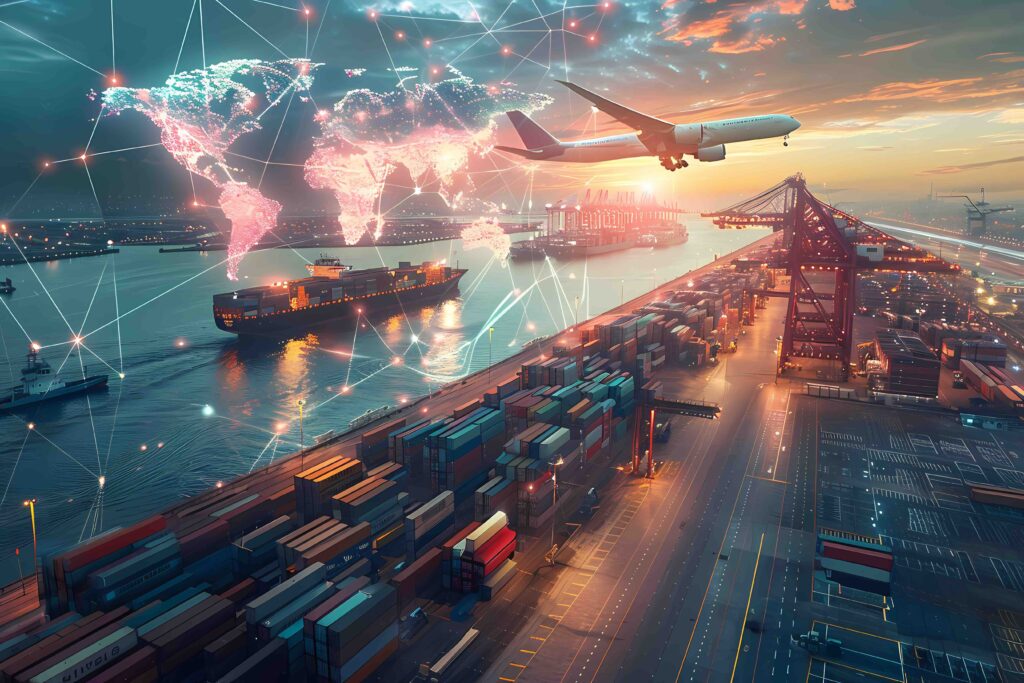
Global supply chains are the backbone of modern commerce, connecting manufacturers, distributors, retailers, and consumers across continents. Historically, supply chains have been complex, opaque, and prone to inefficiencies. Today, technology is revolutionizing these networks, making them faster, more transparent, and more resilient, while also driving broader economic development particularly in emerging markets.
1. Digitalization and Real-Time Data
The role of IoT and sensors:
Internet of Things (IoT) devices, embedded in shipping containers, warehouses, and production lines, provide real-time data on location, temperature, humidity, and inventory levels. Companies can now track shipments across continents, reducing delays and losses.
Impact on efficiency:
Real-time data enables predictive analytics, helping companies anticipate bottlenecks, optimize routes, and adjust production schedules. For example, logistics giants like DHL and Maersk use IoT and AI-powered analytics to minimize transit delays and optimize fleet usage.
2. Artificial Intelligence and Machine Learning
AI and machine learning are improving decision-making in supply chains:
- Demand forecasting: AI models analyze historical sales, seasonal trends, and external factors (like weather or political events) to predict demand more accurately. This reduces waste and ensures critical goods reach markets on time.
- Inventory optimization: Machine learning algorithms help balance inventory levels, reducing storage costs while preventing stockouts.
- Risk management: AI can predict disruptions, such as port closures or natural disasters, allowing companies to proactively adjust supply routes.
3. Blockchain for Transparency and Trust
Blockchain technology provides secure, immutable records of transactions across the supply chain. This improves:
- Traceability: Consumers can track the origin of products, ensuring ethical sourcing and quality control. For example, companies like IBM Food Trust use blockchain to trace food from farm to table.
- Fraud prevention: Counterfeit goods are a significant issue in industries like pharmaceuticals and luxury goods. Blockchain ensures authenticity by creating verifiable records.
- Simplified documentation: Smart contracts automate payments and customs processes, reducing delays and administrative costs.
4. Automation and Robotics
Automation is reshaping warehouses, ports, and factories:
- Warehouse robotics: Robots handle repetitive tasks like picking, packing, and sorting goods, increasing speed and accuracy. Amazon’s automated fulfillment centers are a prime example.
- Automated transport: Self-driving trucks and drones are being piloted to move goods more efficiently, especially in regions with poor infrastructure.
- Smart factories: Robotics integrated with AI enables flexible manufacturing, allowing producers to quickly switch between products to meet market demands.
5. Impact on Economic Development
Technology-driven supply chains do more than improve efficiency they catalyze economic growth:
- Job creation and skills development: While automation may replace some low-skill tasks, new roles in AI, data analysis, robotics, and digital logistics are emerging. Workforce training programs can help countries capitalize on these opportunities.
- Market access for SMEs: Digital platforms and logistics technology allow small and medium enterprises to reach global markets. For instance, e-commerce platforms like Jumia in Africa enable local businesses to sell internationally.
- Improved resilience: Efficient supply chains reduce vulnerability to shocks such as natural disasters, pandemics, or geopolitical tensions, stabilizing economies and securing essential goods.
- Sustainability and resource efficiency: Optimized supply chains reduce waste, lower carbon footprints, and promote environmentally responsible practices, supporting long-term economic development goals.
6. Challenges and Considerations
Despite the benefits, technology adoption in supply chains comes with challenges:
- Infrastructure gaps: Emerging markets may lack reliable internet, energy, or transport networks to fully leverage these technologies.
- Cybersecurity risks: Greater digitalization increases vulnerability to cyberattacks, requiring robust security protocols.
- Capital and training requirements: Small businesses may struggle to adopt AI, blockchain, or robotics due to high costs and skill shortages.
- Regulatory and policy frameworks: Governments need to develop clear regulations for digital trade, data protection, and automation.
Technology is reshaping global supply chains in profound ways, making them smarter, faster, and more transparent. By enhancing efficiency, reducing waste, and enabling SMEs to participate in global trade, these innovations contribute directly to economic development.
For emerging markets, the challenge lies in building the infrastructure, skills, and regulatory frameworks needed to harness these tools effectively. When done successfully, technology-driven supply chains can not only support business growth but also strengthen economies, create jobs, and improve living standards worldwide.
Read more on Tech Gist Africa:
How Technology is Advancing Global Food Security and Reducing Hunger
Global Startup Ecosystems: Key Drivers of Innovation in Emerging Markets
The Rise of Quantum Computing: What It Means for the Future of Global Innovation